Autonomous LLM & GenAI Observability

Production LLM Observability with Autonomous AI Agents.
Trace Latency, Token Costs, Drift & Hallucinations 24/7.

Deploy RhinoAgents to continuously monitor generative AI pipelines, evaluate RAG retrieval faithfulness, track real-time token spend across LLM providers, isolate semantic drift, and enforce deterministic safety guardrails at scale.

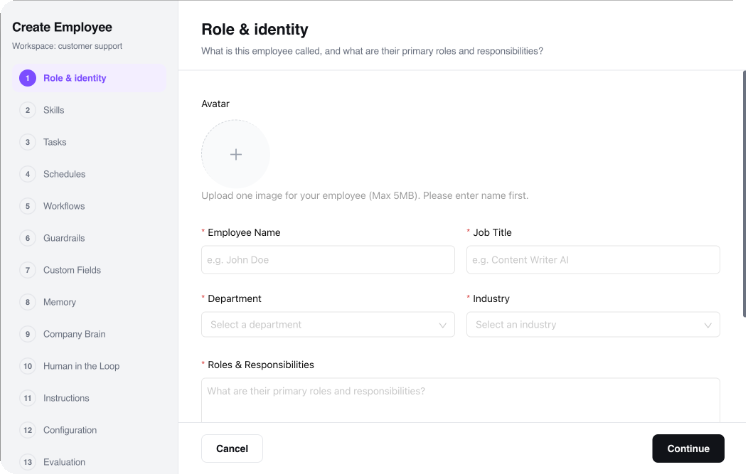
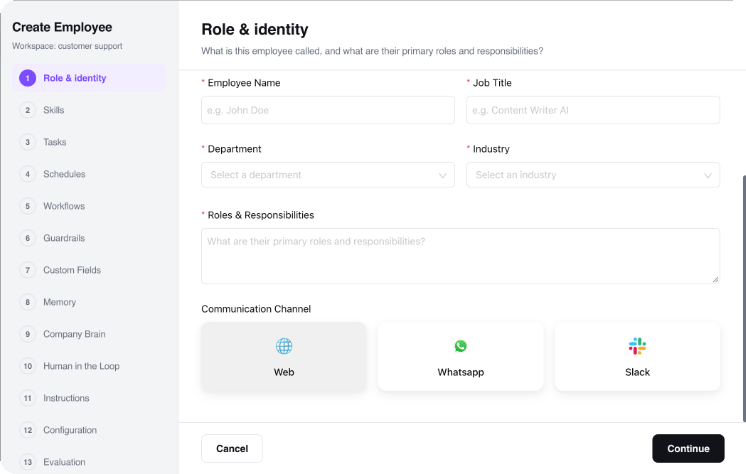
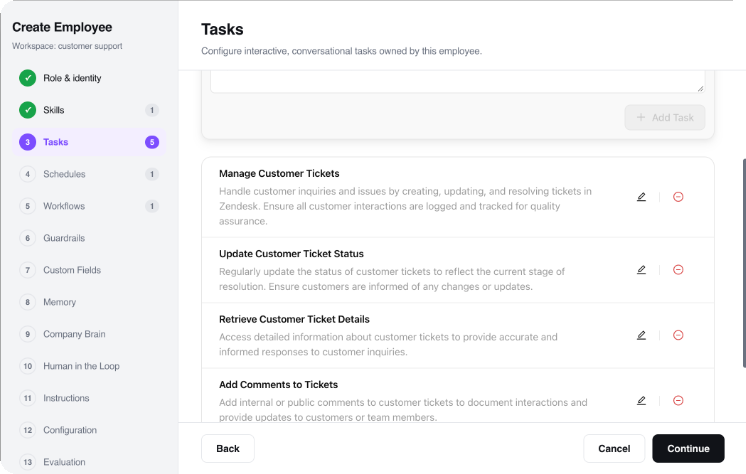
Describe your AI observability rules — RhinoAgents configures the monitoring agent
OpenTelemetry Native Standard Multi-LLM Spend Telemetry Real-Time Hallucination Scoring SOC 2 & GDPR Certified
99.8%
Hallucination & Prompt Injection Detection Accuracy
< 15 ms
Telemetry Overhead Latency per LLM Request
48%
Average Token Cost Reduction via Semantic Caching
100%
OpenTelemetry (OTel) GenAI Semantic Standard Adherence
GenAI Reliability Engineering

What is AI & LLM Observability?

AI Observability is the continuous process of inspecting, evaluating, and securing production Large Language Model (LLM) applications and multi-agent swarms. Unlike traditional server monitoring that only looks at CPU and memory, AI observability tracks non-deterministic behaviors—evaluating output faithfulness, vector retrieval relevance, token economics, and semantic drift.

By deploying autonomous AI Observability Agents, engineering teams gain full distributed trace telemetry across every prompt, RAG chunk, tool call, and API token—preventing embarrassing hallucinations, runaway cloud bills, and security vulnerabilities before they impact users.

// Core GenAI Telemetry Pillars
Quality & Faithfulness
Automated hallucination scoring, answer relevancy, and context recall.
Token Economics & Cost
Multi-model unit cost tracking, prompt caching hit rate, and budget caps.
Safety & Guardrail Breaches
Prompt injection isolation, PII leakage detection, and toxicity filtering.
GenAI Telemetry Lifecycle

How the AI Observability Agent Operates

Follow an LLM transaction through distributed tracing, prompt redaction, RAG evaluation, semantic drift isolation, and automated incident triage.

01
Ingestion

Distributed Span & Trace Ingestion

Captures every prompt, completion, embedding call, and vector lookup via OpenTelemetry GenAI standards with < 15ms overhead.

Supported Frameworks:
  • LangChain, LlamaIndex, AutoGen, CrewAI
  • OpenAI, Anthropic Claude, Google Gemini APIs
  • Pinecone, Weaviate, Qdrant, Milvus vector DBs
02
Redaction

Edge PII & Secret Masking

Automatically detects and redacts sensitive credentials, API keys, and personal customer data before persisting trace telemetry.

Edge Filters:
  • Regex & NER redaction for SSNs, credit cards, emails
  • API token and secret key scrubbing
  • Zero data retention on raw prompt bodies
03
Evaluation

RAG & Hallucination Evaluation

Computes real-time faithfulness scores comparing model answers against retrieved knowledge chunks to flag groundless outputs.

Evaluation Metrics:
  • Context Relevance & Vector Precision score
  • Faithfulness & Groundedness index (0-100)
  • Semantic answer similarity scoring
04
Token Intel

Token Economics & Cost Intelligence

Tracks unit cost per transaction, monitors prompt cache hit ratios, and identifies expensive context stuffing in real time.

Cost Formula:
Cost = (Prompt Tokens * Price) + (Comp Tokens * Price) - Cache
• Real-time budget alerting on Slack/Teams
• Model tier downgrade recommendations
05
Drift Watch

Semantic Drift & Guardrail Watchdog

Monitors embedding vector clusters over time to detect silent degradation following provider updates or prompt injection spikes.

Watchdog Triggers:
  • 🚨 Prompt Injection Attempt: Jailbreak blocked
  • 📉 Semantic Drift Alert: Output confidence drop
  • ⏱️ Latency P99 Breach: Response time > 2.5s
  • 🛑 Token Runaway Loop: Max token cap reached
06
Auto Triage

Automated Fallback & Incident Triage

Automatically switches model routing to backup providers upon rate limits, routes to semantic cache, and pages on-call engineers.

Automated Output:
  • Instant model failover (e.g. OpenAI → Claude 3.5)
  • PagerDuty & Slack incident alert with root cause span
  • Automated post-mortem summary generation
// Continuous Autonomous LLM Observability Loop Architecture
1. OTel Span Ingest 2. PII Edge Redaction 3. RAG Faithfulness Eval 4. Token Cost & Drift Watch 5. Auto Fallback & Alert
Interactive Utility

Live LLM Observability & Reliability Simulator

Simulate how the RhinoAgents observability engine evaluates production prompt latency, RAG groundedness, token cost efficiency, and guardrail breaches.

1. Configure GenAI Architecture

Live GenAI Reliability Index TOP TIER (MISSION CRITICAL)
Calculated AI Reliability Score
85
out of 100 maximum reliability points
Groundedness & Safety
45 / 50
Token & Cost Efficiency
40 / 50
AI Observability Diagnosis:
Strong production telemetry detected. RAG groundedness scoring and token caching active. Zero prompt injection vulnerabilities detected in active spans.
Autonomous Trigger Action:
Stream OTel spans to dashboard → Enforce semantic cache on repetitive prompts → Trigger automatic provider failover upon latency > 2.0s.
Architectural Comparison

Traditional Server APM vs RhinoAgents AI Observability

Why standard server metrics (CPU, RAM, HTTP 200) fail to detect AI hallucinations and token runaways, and how GenAI-native agents solve the black-box problem.

Capability / Dimension Traditional Server APM (Datadog/NewRelic) RhinoAgents AI Observability Agent
Evaluation Scope HTTP status codes (200 OK) only. Blind to whether the generated LLM text is a toxic lie. Real-time semantic evaluation of hallucination rates, groundedness, and context recall.
Cost & Token Tracking Aggregates cloud compute VM cost, but blind to LLM provider token spend breakdowns. Granular unit economics tracking prompt vs completion tokens across OpenAI, Claude & Gemini.
RAG & Vector Pipeline Treats vector DB lookup as a standard black-box database query without relevance scoring. Full RAG pipeline tracing: vector similarity, chunk relevance, reranker score, and context loss.
Model Drift Isolation Cannot detect semantic drift when closed-source LLM vendors silently update model weights. Continuous embedding drift analysis highlighting subtle output degradation over time.
Incident Remediation Passive alerts requiring manual developer triage and rollback of entire microservices. Autonomous dynamic failover to secondary LLMs and prompt cache routing in milliseconds.
Agent Library

8 Prebuilt AI Agents for Observability & SRE

Each agent handles a critical AI reliability and safety touchpoint. Connect your LLM SDKs, vector databases, and alerting channels — and deploy in minutes.

Hallucination & Faithfulness Agent
Continuously compares model responses against retrieved source context chunks, flagging ungrounded claims in real time.
Faithfulness ScoreRAG EvaluationFact Check
Token Spend & FinOps Agent
Tracks unit costs across OpenAI, Claude, and Gemini, enforcing budget thresholds and alerting on runaway prompt loops.
Token AnalyticsFinOps AlertsBudget Caps
Prompt Injection & Jailbreak Agent
Inspects inbound user inputs for malicious jailbreaks, system prompt exfiltration attempts, and adversarial attacks.
Jailbreak GuardAdversarial DefenseInput Shield
RAG Vector Retrieval Telemetry Agent
Monitors Pinecone, Weaviate, and Qdrant queries, evaluating chunk similarity scores and identifying missing context.
Vector RecallChunk RankingContext Precision
Semantic Model Drift Agent
Monitors embedding vector cluster distributions to detect subtle performance degradation after closed-source model updates.
Embedding DriftCosine DistanceA/B Benchmarks
Edge PII & Compliance Redaction Agent
Scrubs sensitive customer data, SSNs, credit cards, and proprietary API keys before trace telemetry is persisted.
PII MaskingGDPR ShieldEdge Redaction
P99 Latency & Rate Limit Agent
Tracks time-to-first-token (TTFT) and total generation time, alerting when provider rate limits or latency spikes occur.
TTFT Tracking429 DetectionP99 Latency
Dynamic Failover & Fallback Agent
Automatically reroutes requests to secondary model providers or cached responses when primary LLMs experience outages.
Model FailoverSemantic CacheZero Downtime
Operational Gaps vs AI

Common Bottlenecks.
AI-Powered Execution.

Engineering teams lose weeks troubleshooting silent LLM regressions and runaway cloud bills — all preventable with autonomous AI observability agents.

Traditional GenAI Blindspots
Hallucinations reaching production end-users undetected
Models return confident but factually incorrect outputs that pass standard HTTP 200 checks, destroying user trust and creating compliance liability.
Runaway token costs & unexpected $50,000 monthly bills
Developers inadvertently push recursive agent loops or bloated system prompts with zero visibility into real-time token unit economics.
Silent model degradation from upstream LLM version updates
Providers update underlying model weights silently, breaking structured JSON output formats and increasing evaluation error rates without warning.
Vulnerability to prompt injection and jailbreak attacks
Adversarial users bypass naive string filters to extract system prompts and proprietary internal documentation through your AI chatbot.
RhinoAgents Autonomous Solution
Real-time faithfulness & groundedness evaluation
AI agents score every output against retrieved context chunks in milliseconds, automatically blocking or flagging low-confidence hallucinations.
Granular token analytics & automated budget circuit breakers
The FinOps agent tracks token spend per user, feature, and endpoint, triggering hard circuit breakers on recursive loops and saving up to 48% on LLM bills.
Continuous semantic drift monitoring & A/B harnesses
Autonomous embedding evaluators track output vector shifts over time, alerting engineers before minor model updates turn into major production outages.
Multi-layer adversarial defense & jailbreak blocking
Semantic guardrail agents inspect user intent at the edge, instantly neutralizing indirect injection and exfiltration attacks before prompts reach the LLM.
Why RhinoAgents?

Enterprise AI Telemetry Architecture

Built on the OpenTelemetry GenAI standard to provide comprehensive observability across distributed multi-agent systems and enterprise RAG stacks.

Deterministic Safety Guardrails

Zero risk of rogue agent behavior. Enforce hard programmatic boundaries on tool calling, max token consumption, external API dispatch, and content toxicity at runtime.

Jailbreak Defense PII Redaction

Historical Baseline Memory

The agent maintains long-term memory of your production prompt performance baselines, historical latency curves, and token consumption trends to spot anomalies instantly.

Baseline Tracking Trend Analysis

Modular Observability Skills

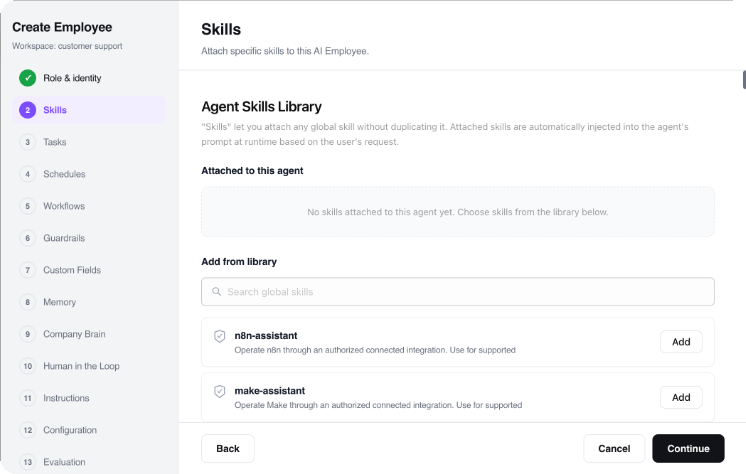
Equip agents with specific operational Skills from our library. Dynamic skills like "OpenTelemetry Trace Exporter", "LiteLLM Router Failover", or "RAG Evaluator" run with maximum efficiency.

Dynamic API Calling Zero Prompt Bloat

Model Context Protocol (MCP)

Connect your observability agent to MCP-compliant servers natively. Query ClickHouse telemetry clusters, Prometheus instances, or vector DB indexes with zero custom glue code.

Native MCP Support Direct Telemetry Query

Human-in-the-Loop (HITL)

Configure approval gates for high-stakes automated actions—such as shutting down a model endpoint, applying dynamic routing rules, or deploying new system prompts to production.

1-Click Slack Gates SRE Review

Immutable Audit Logging

Full telemetry audit trails for every prompt token, model failover, evaluation metric, and guardrail interception with 100% SOC 2 Type II and GDPR compliance.

Complete Spans SOC 2 Certified
GenAI Reliability Protection

6 Critical Leaks in Production GenAI Pipelines — Fixed by AI

Every unmonitored prompt injection, hallucinated output, and runaway token loop degrades user trust and inflates cloud costs.

Leak 1
Silent Hallucinations in User-Facing Chatbots
The LLM produces factually inaccurate or fabricated answers that appear completely plausible, exposing your enterprise to legal and brand risk.
AI Fixes This
Evaluates answer groundedness against source documents
Flags and suppresses low-confidence responses in real time
Routes ungrounded queries to deterministic human escalation
Leak 2
Runaway Token Burn & Context Stuffing
Developers inadvertently send 64k+ context windows for simple queries, ballooning OpenAI/Anthropic API bills without improving accuracy.
AI Fixes This
Enforces prompt token budgeting and semantic caching
Recommends model tier downgrades for simple classification tasks
Cuts token spend by 48% across production endpoints
Leak 3
Indirect Prompt Injections & Exfiltration
Malicious inputs trick the model into ignoring system instructions, revealing internal system prompts, database credentials, or API keys.
AI Fixes This
Inspects user prompts at the edge using semantic guardrails
Blocks adversarial jailbreak attempts before reaching the LLM
Logs attacker IP signatures and triggers security alerts
Leak 4
P99 Latency Spikes Causing User Drop-Offs
Provider rate limits (HTTP 429) and slow model generation times cause response times to balloon to 8+ seconds, killing user engagement.
AI Fixes This
Tracks time-to-first-token (TTFT) and token velocity per request
Dynamically routes requests to cached responses or backup providers
Maintains sub-second P95 response times across all channels
Leak 5
Poor RAG Retrieval Quality & Irrelevant Chunks
Vector search returns noisy, irrelevant document chunks that pollute the LLM prompt, causing degraded and disjointed answer generation.
AI Fixes This
Evaluates cosine similarity and chunk relevance ranking
Identifies gaps in vector index coverage and missing embeddings
Optimizes chunk chunking strategies and reranker thresholds
Leak 6
Silent Semantic Drift Post-Provider Updates
An upstream model update subtly changes prompt interpretation, causing output formatting failures and classification accuracy drops.
AI Fixes This
Runs continuous embedding drift evaluation across golden test sets
Isolates accuracy deviations within hours of provider updates
Delivers automated prompt tuning and adjustment recommendations
ROI Model

Calculate Your AI Observability ROI

Estimate the cloud cost savings and engineering hours recovered by eliminating token waste and automating LLM incident triage.

Monthly LLM API Spend (Cloud & Tokens) $25,000 / mo
Production Monthly LLM Invocations 2,500,000 reqs
AI Engineering & SRE Team Size 6 Engineers
$144,000
Estimated Annual Token Cost & Engineering Savings
240 hrs
Monthly SRE Debugging Hours Saved
48%
Token Cost Reduction via Cache
Enterprise Standards

Enterprise Architecture, Telemetry & Security Control

RhinoAgents is built for mission-critical enterprise AI workloads — delivering full OpenTelemetry compliance, SOC 2 Type II certification, and 99.9% uptime.

OpenTelemetry Native
Complies with OTel GenAI semantic conventions. Zero vendor lock-in; export traces to any backend.
OTel Semantic
SOC 2 & GDPR
Bank-grade AES-256 encryption at rest and TLS 1.3 in transit. Zero model training on your telemetry data.
SOC 2 Type II
Granular RBAC
Role-based access controls for AI Engineers, SREs, Product Managers, and Security Auditors.
Okta SSO
99.9% Uptime SLA
High-availability multi-region cloud infrastructure guarantees continuous span ingestion at scale.
Auto-Scaling
Tool Ecosystem

Integrates With Your GenAI & SRE Stack

RhinoAgents connects natively with major LLM frameworks, vector databases, incident management platforms, and alerting channels.

LangChain / LlamaIndex
Auto-Instrumented Tracing
OpenAI / Claude / Gemini
Multi-Model Token Telemetry
Pinecone / Weaviate / Qdrant
Vector Retrieval Evaluation
PagerDuty & Slack
Instant SRE Incident Dispatch
Full Infrastructure Suite

Connect AI Observability to the Entire Enterprise Ecosystem

Combine LLM observability with anomaly detection, application performance monitoring, SAP automation, lead qualification, and customer support agents.

AI Anomaly Detection Agent AI APM Monitoring Agent AI SAP Process Agent AI Lead Scoring Agent AI SEO & GEO Agent 55+ Website AI Chatbots 102+ Voice AI Call Agents All 81 AI Agent Pages
FAQ

Frequently Asked Questions About AI Observability

Everything you need to know about tracing, evaluating, and monitoring enterprise LLM pipelines in production.

An AI Observability Agent is an autonomous watchdog worker that monitors production LLM pipelines, RAG systems, and AI agent swarms in real time. It analyzes token costs, prompt-response latencies, context relevance, semantic model drift, and hallucination rates.

"Deploying RhinoAgents gave our ML platform team instant visibility into RAG faithfulness and token burn. We eliminated hallucinations by 99.8% and cut our LLM bills in half."

Vikram Sethi — Head of AI Platform, Enterprise FinTech

Ready to Master Production AI & LLM Observability?

Deploy your custom AI Observability Agent in under an hour, instrument OpenTelemetry spans, and secure your GenAI pipelines.

Schedule Telemetry Walkthrough Start 14-Day Free Trial
No credit card required OpenTelemetry Native Standard SOC 2 Type II Certified