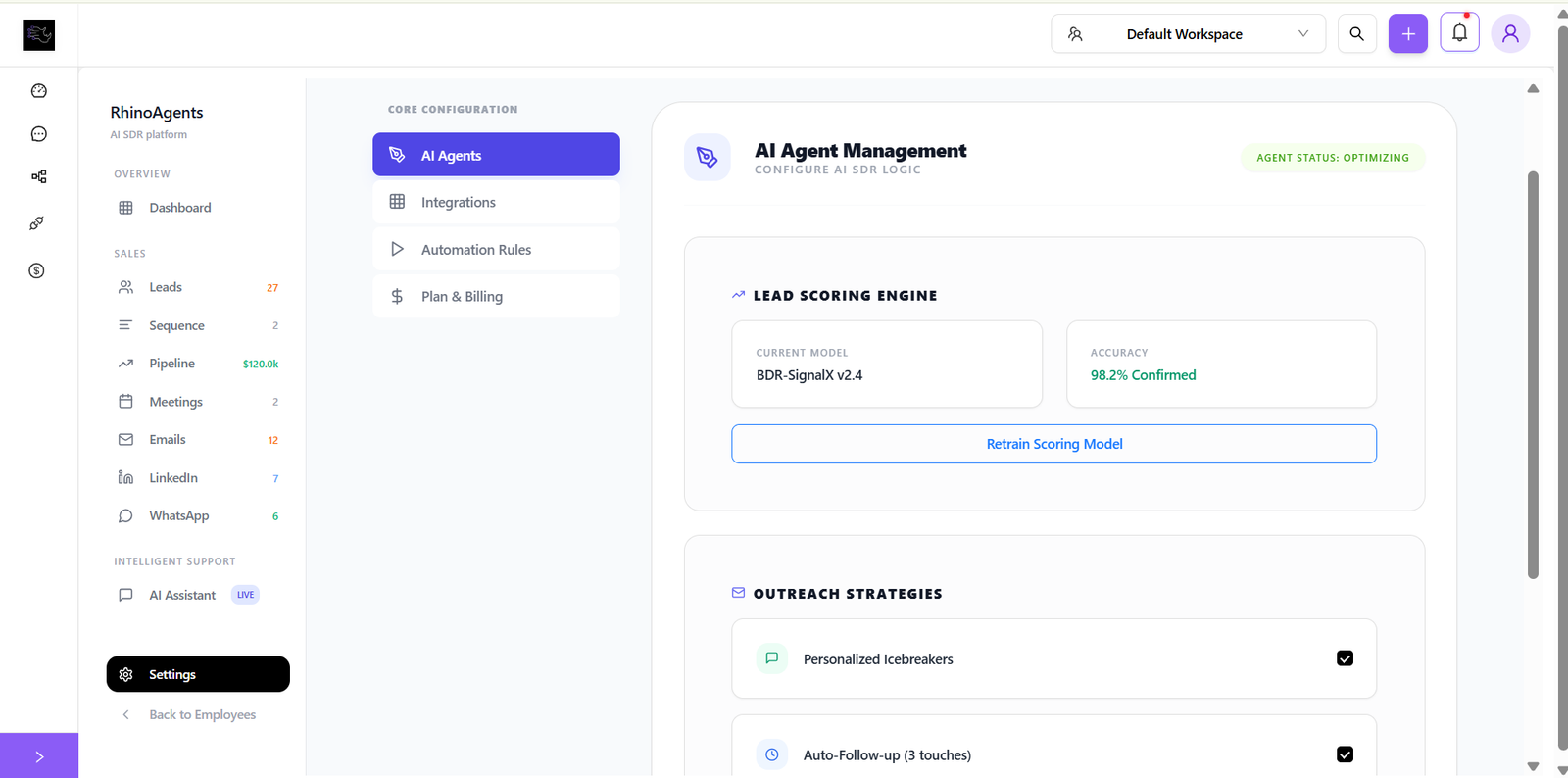
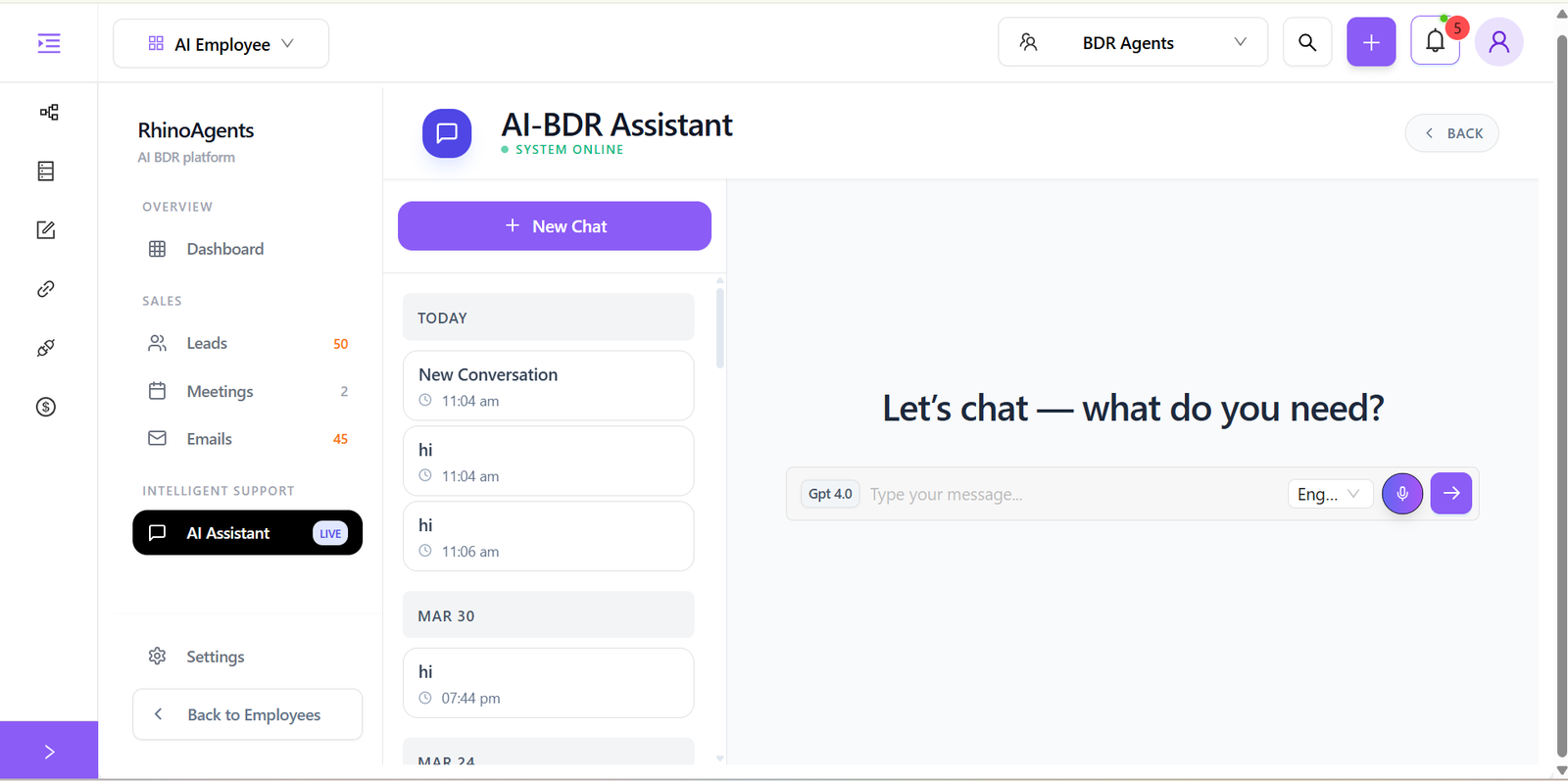
5 Modules — All Running Autonomously
Unlike the AI BDR Agent where you configure each module, the Employee manages all five autonomously and decides how to use them based on performance data.
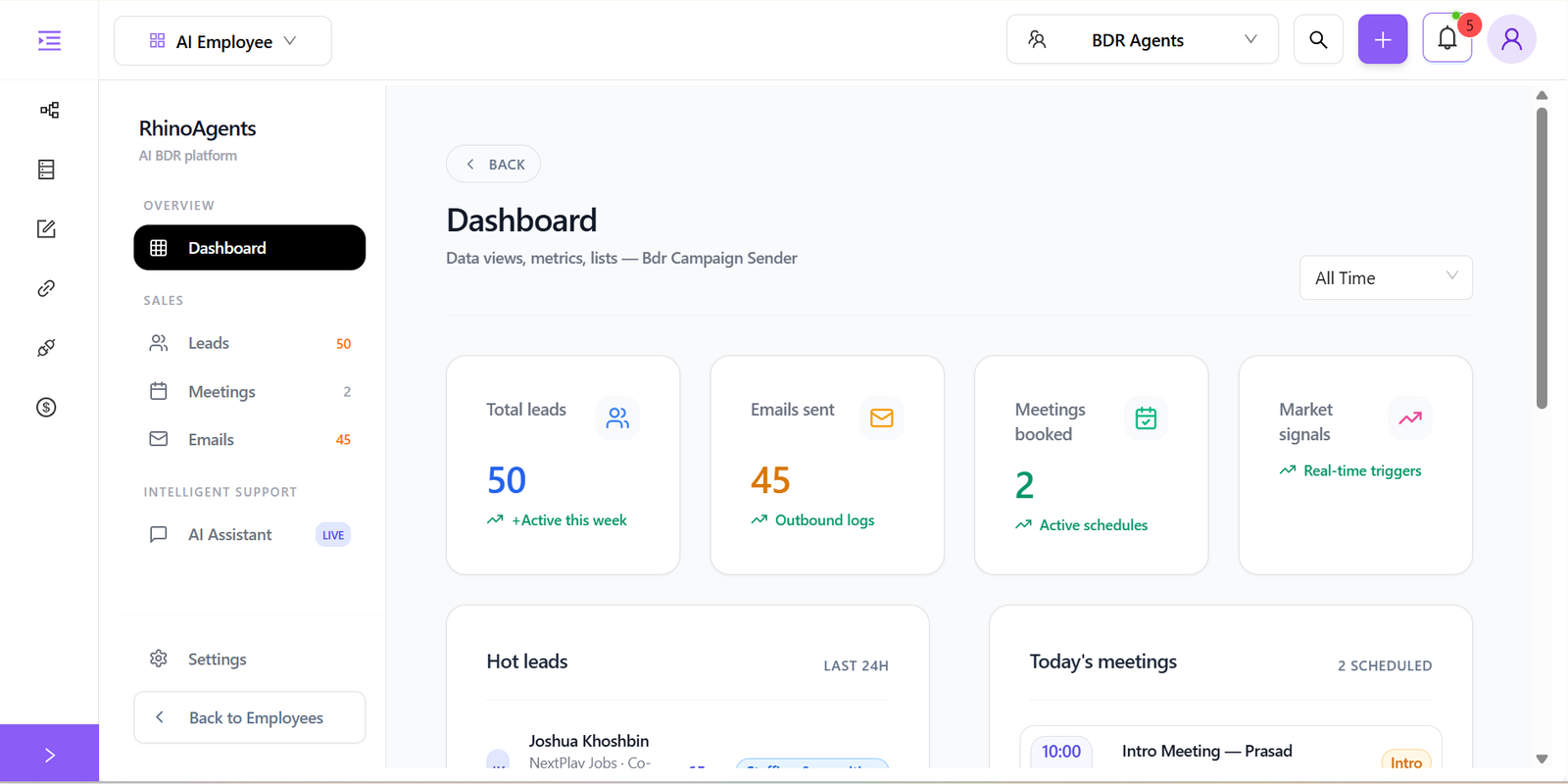
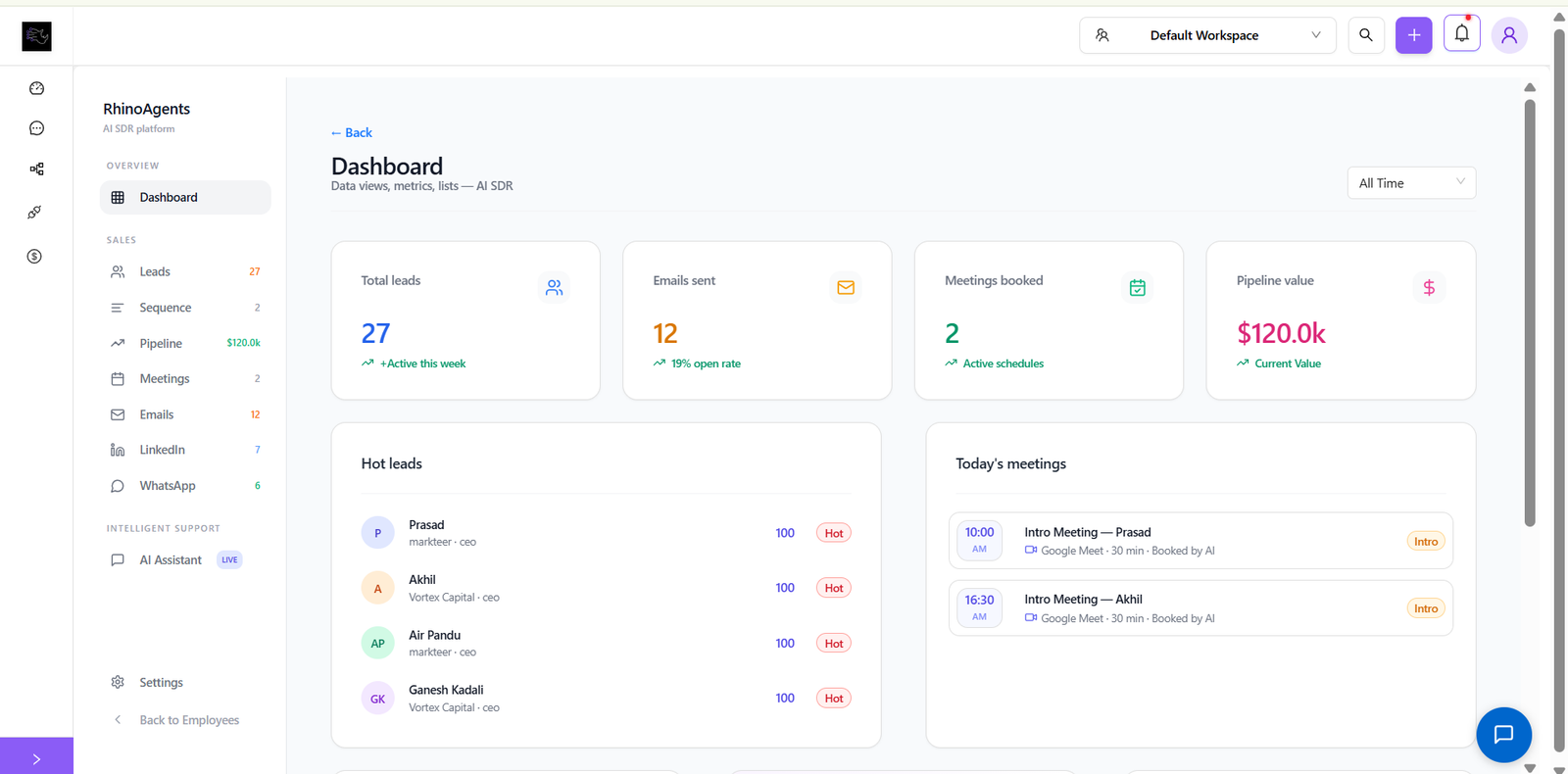
Autonomous Performance Dashboard
The Employee's self-managed command center. Unlike an agent dashboard you check, this is the Employee's own view — it uses this data to make decisions, spot underperformance, and adapt strategy without you needing to intervene.
- KPI tracking vs onboarding goals (meetings/mo, pipeline value)
- Decision log — every autonomous change with rationale
- Weekly performance report generated by the Employee
- Channel performance, reply rates, conversion trends
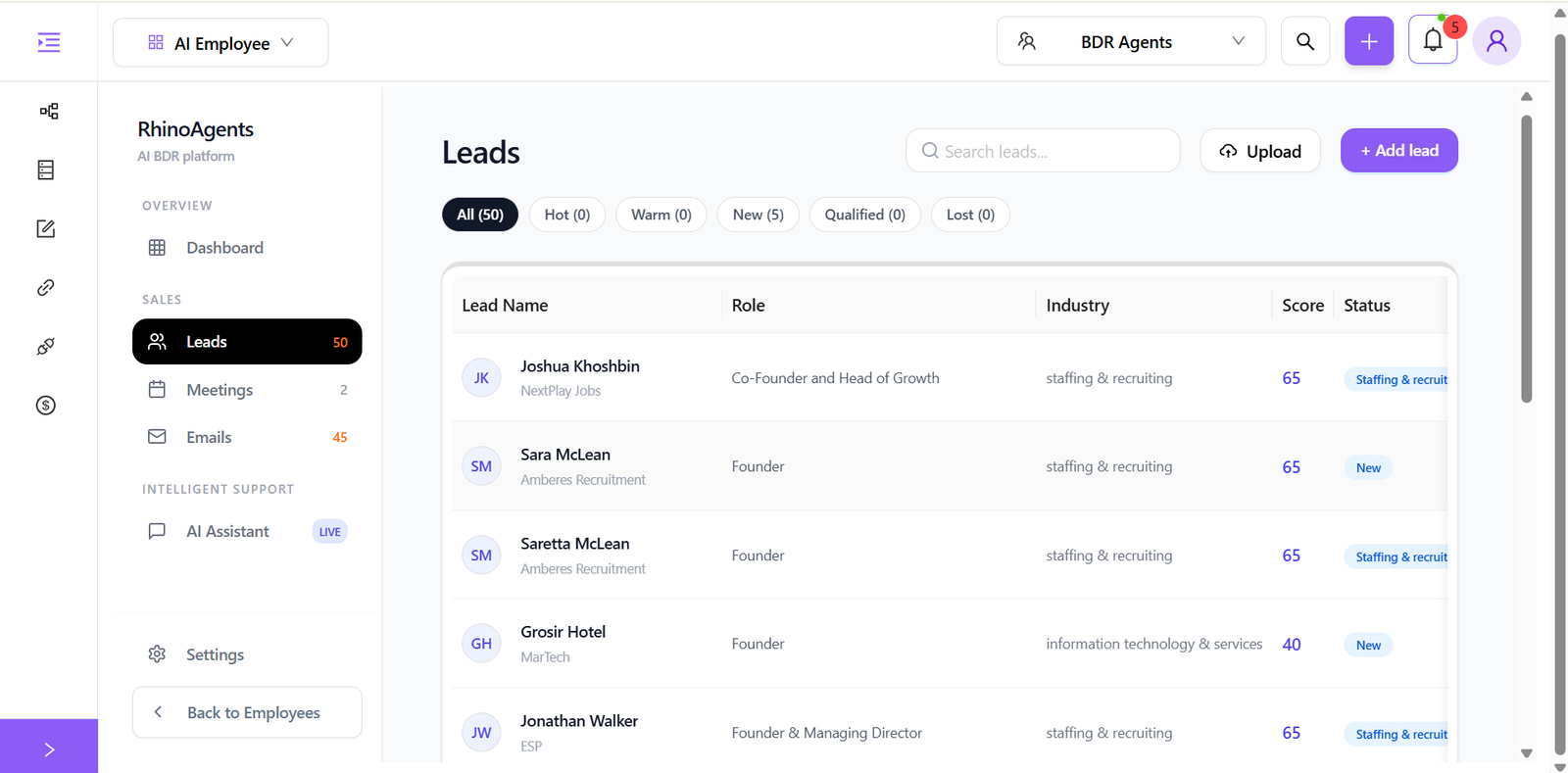
Self-Managed Lead Prospecting
The Employee doesn't just execute your ICP filter — it refines it over time. As it learns which prospect segments convert to meetings, it autonomously adjusts targeting to focus more on high-converting profiles.
- Adapts ICP filters based on conversion data
- Auto-enrichment via ZoomInfo, Apollo.io, Clearbit, Lusha
- Manages its own prospect queue and nurture pipeline
- Processes 10,000+ leads simultaneously
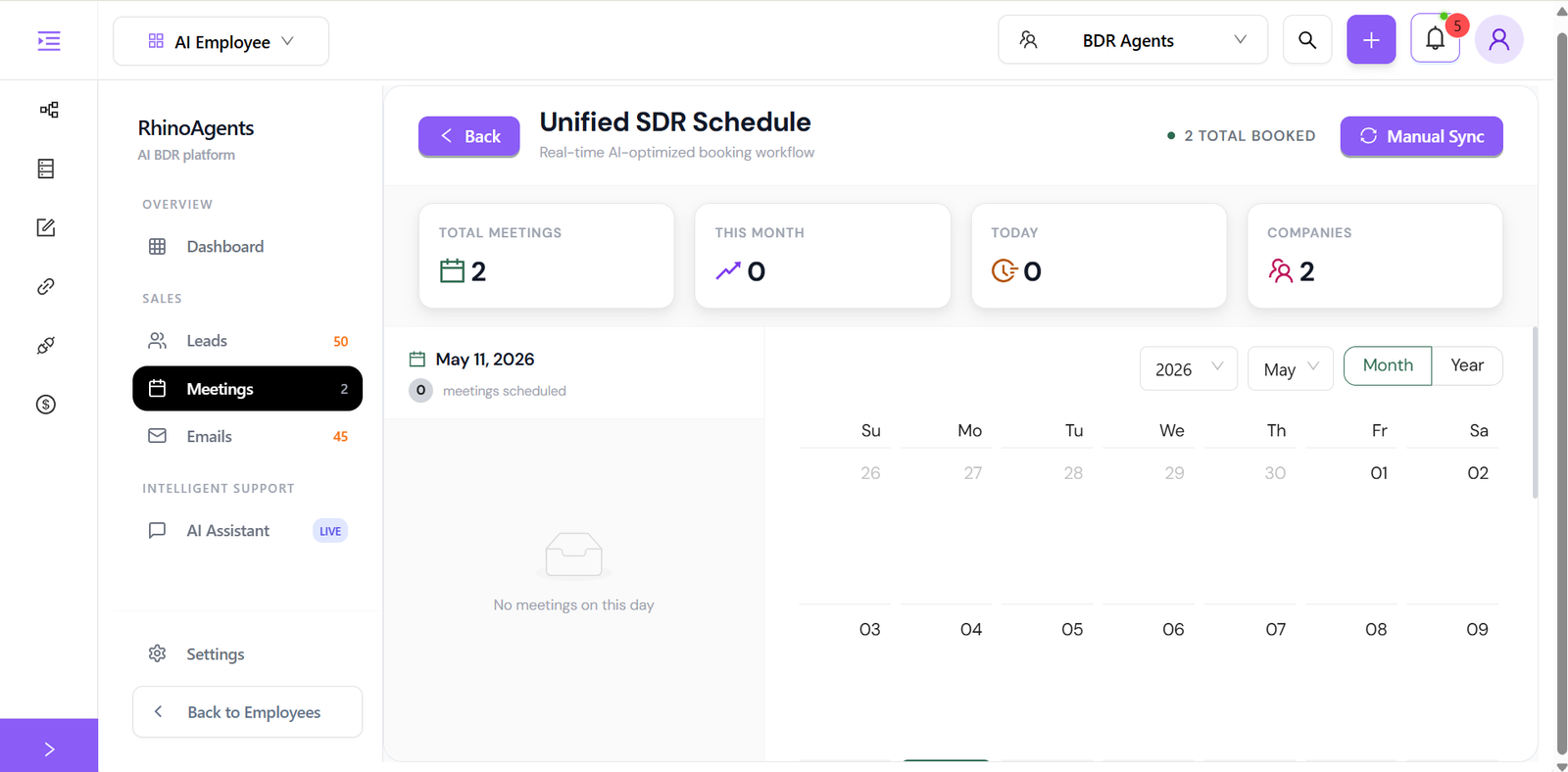
Autonomous Meeting Booking
When a lead qualifies, the Employee handles the full scheduling workflow — checking calendar availability, proposing slots, managing the back-and-forth, and sending confirmed invites. Zero human involvement required.
- Integrates with Google Calendar, Outlook, and Calendly
- Round-robin routing across your full AE team
- Auto reminders, no-show handling, and rescheduling
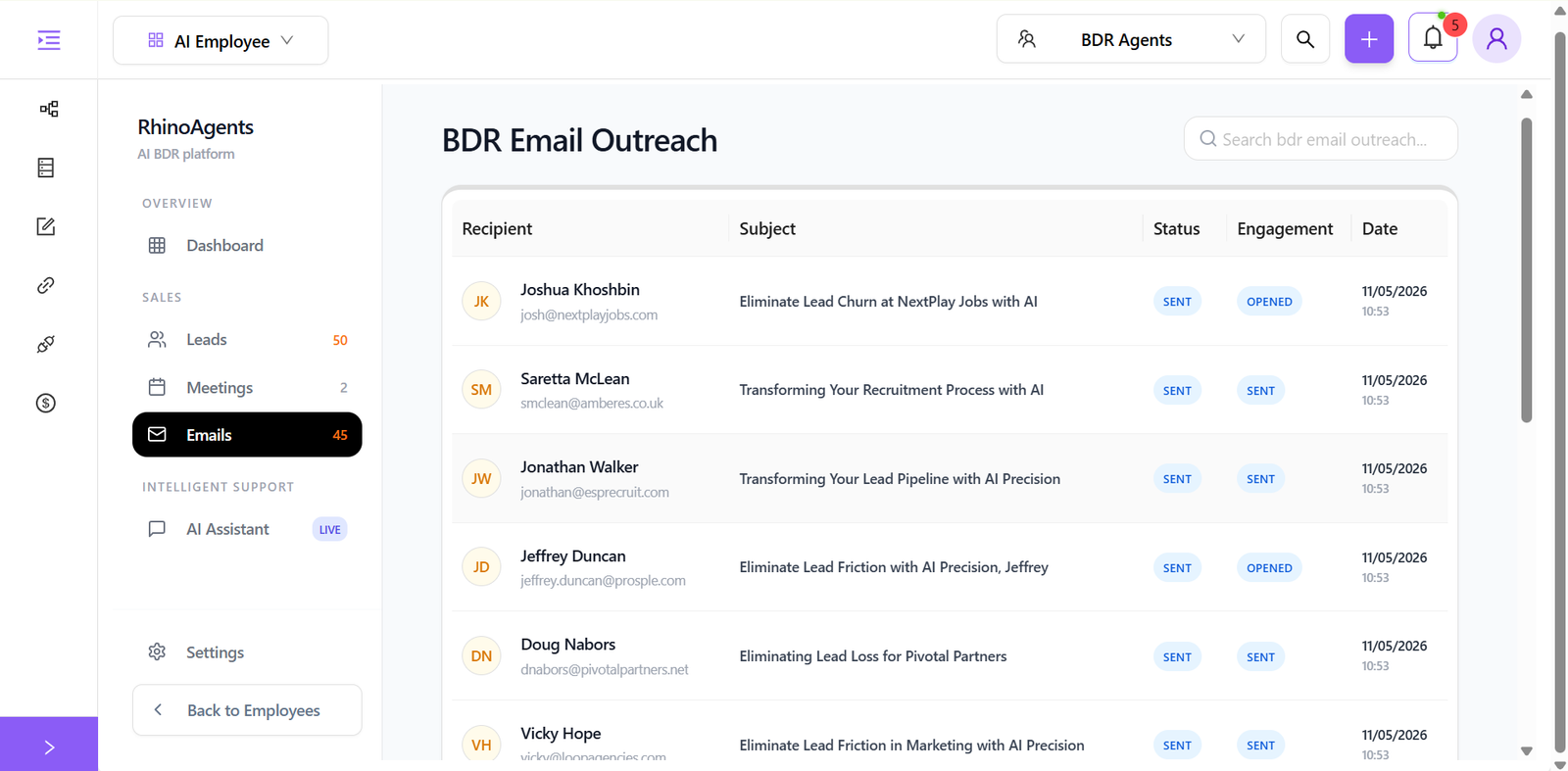
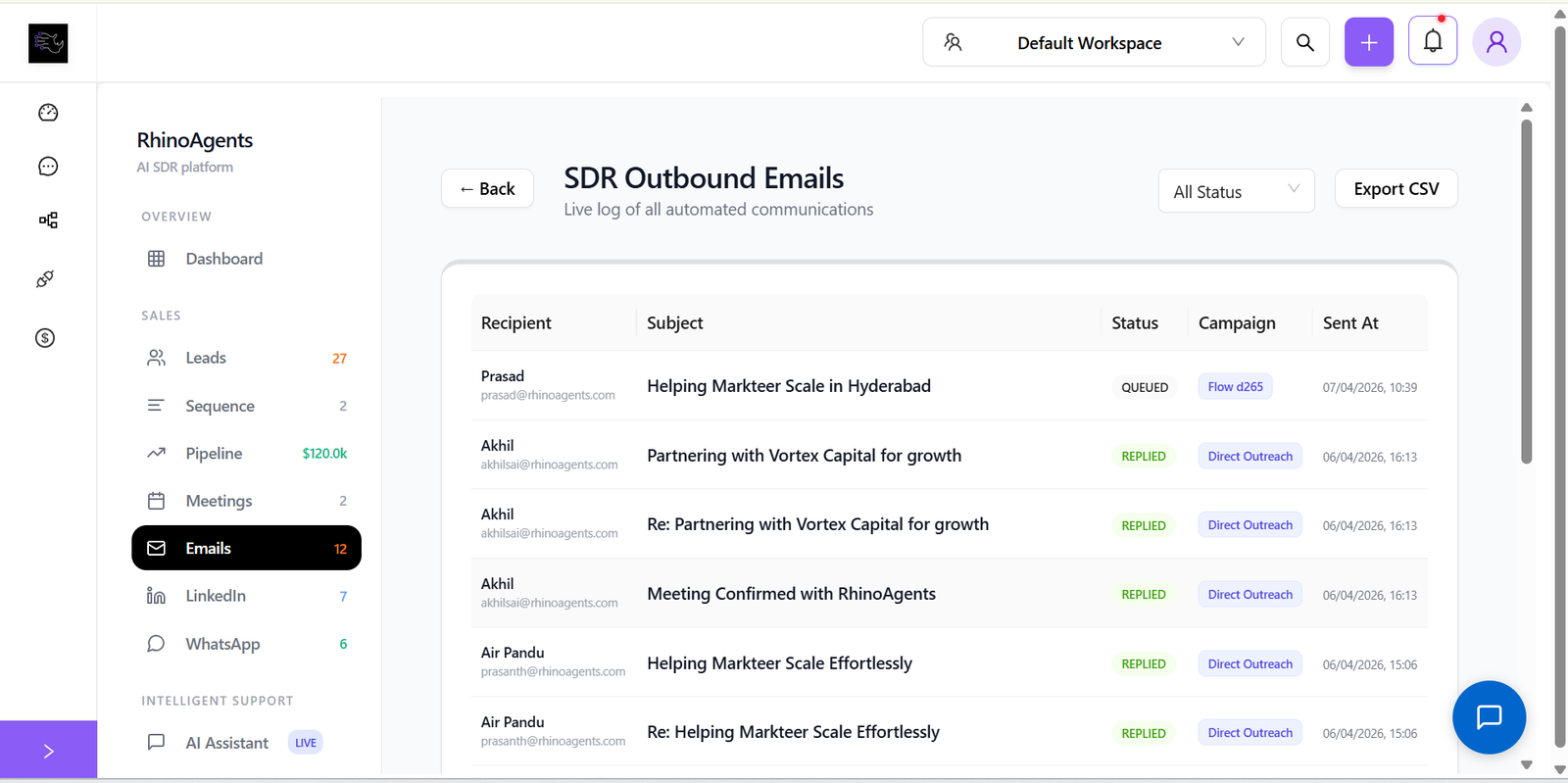
AI-Optimized Outreach & Email Sequences
The Employee doesn't just send your configured templates — it generates, tests, and iterates on email sequences based on open and reply rates. It knows which subject lines work for which verticals and keeps improving.
- Autonomous A/B testing on subject lines and CTAs
- Per-vertical messaging adaptation based on reply data
- Personalization from CRM, enrichment, and behavioral signals
- Reply handling, follow-ups, and objection responses
Employee Settings & Goal Management
Unlike an agent where you control every config parameter, the Employee has a higher-level settings panel where you set strategic goals — the Employee figures out how to achieve them. Monthly meeting targets, ICP priorities, messaging boundaries, and escalation rules.
- Goal-based configuration: set targets, not tactics
- Messaging guardrails — define boundaries, not scripts
- Escalation rules for high-value or complex leads
- Full CRM sync: Salesforce, HubSpot, Zoho, Pipedrive